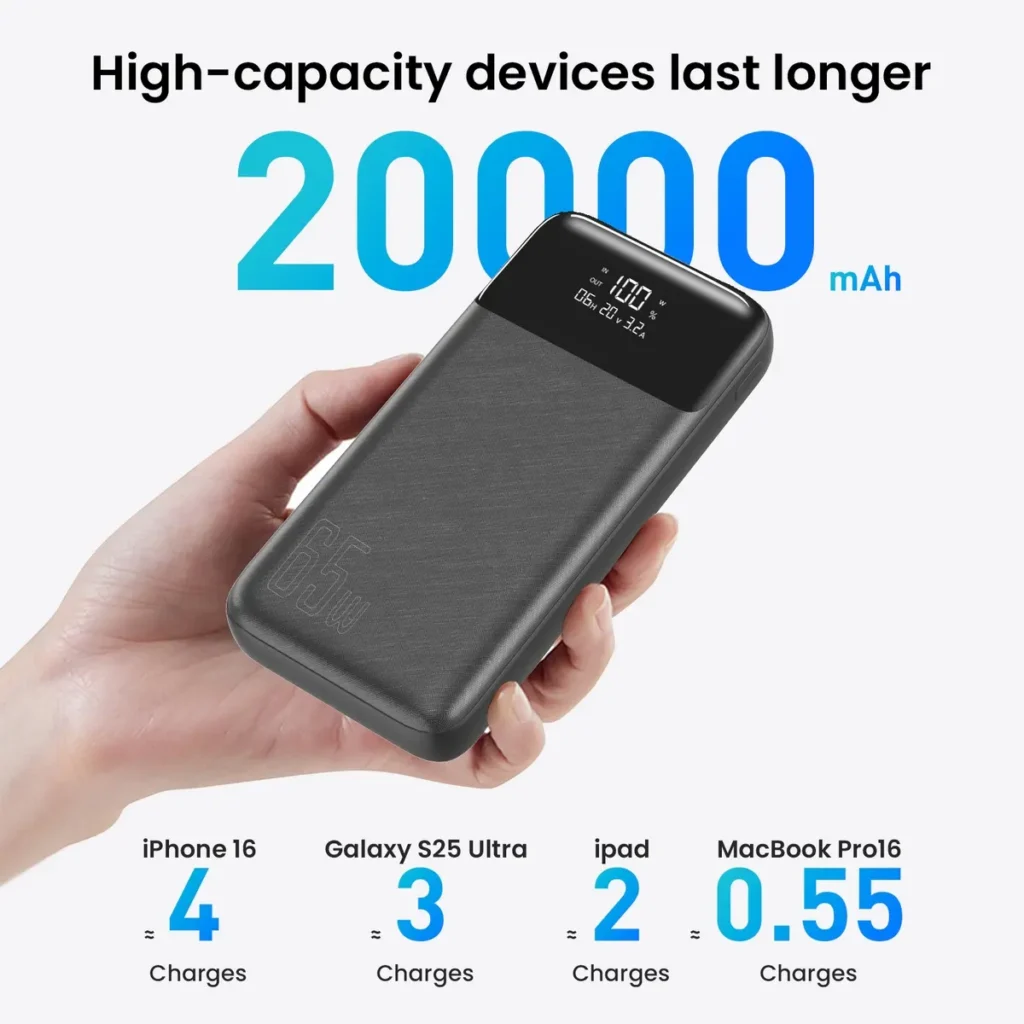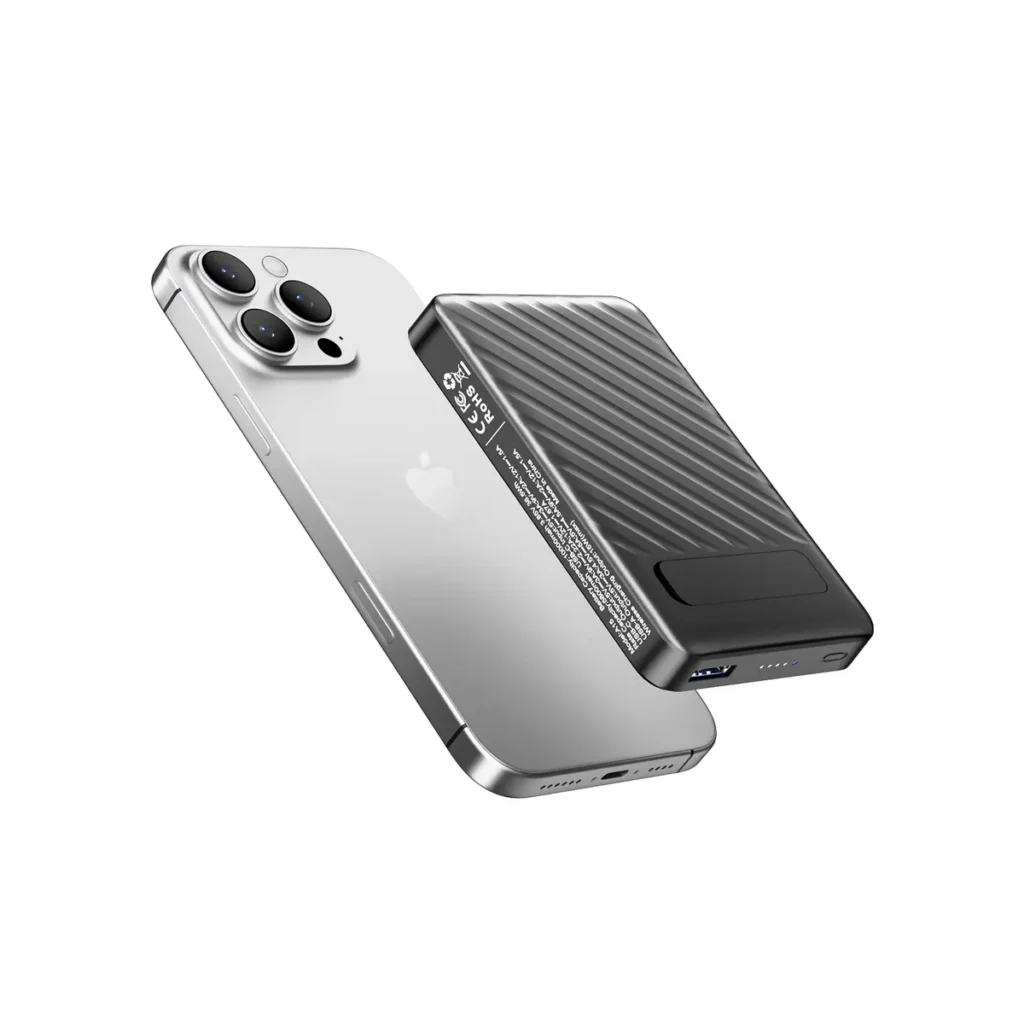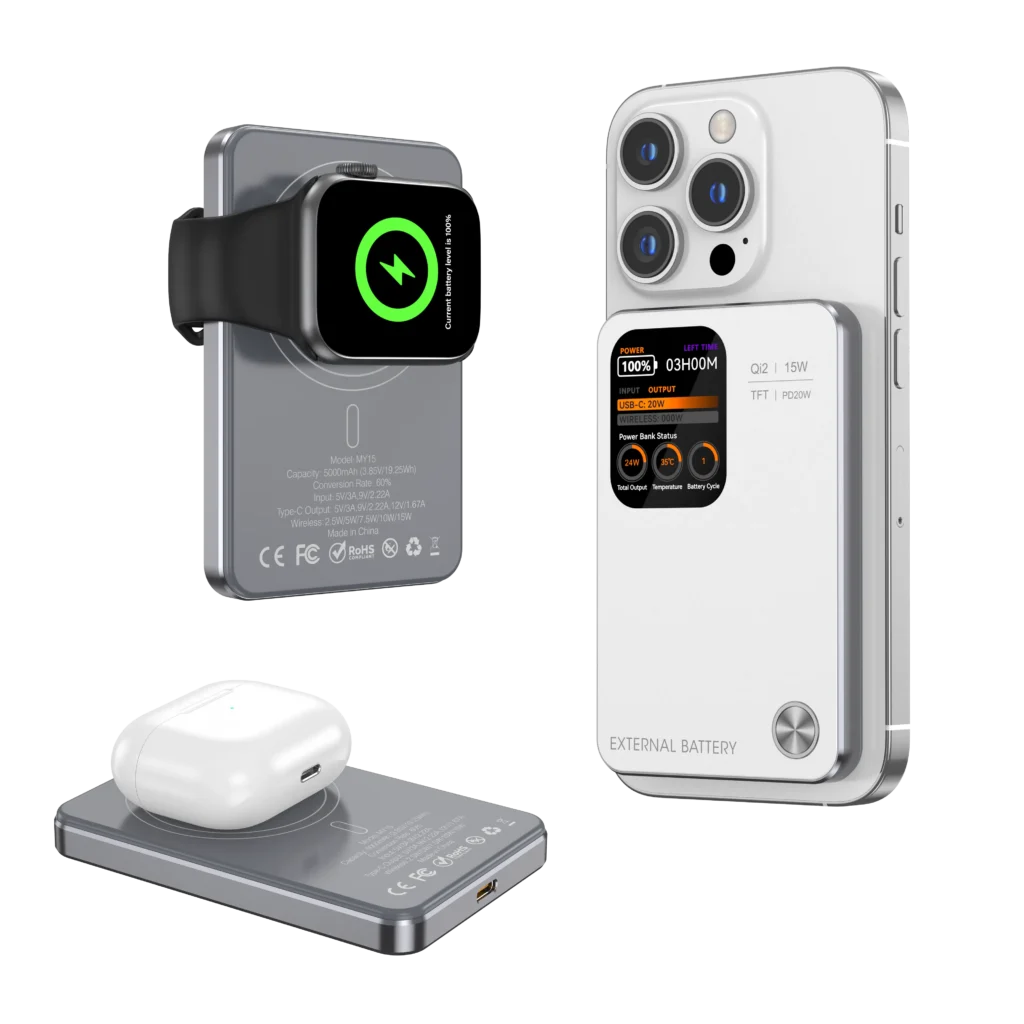
Many iPhone users face the same problems: battery anxiety and slow charging during busy days.
A portable mobile power bank seems like the obvious solution, but choosing the wrong one often leads to disappointment.
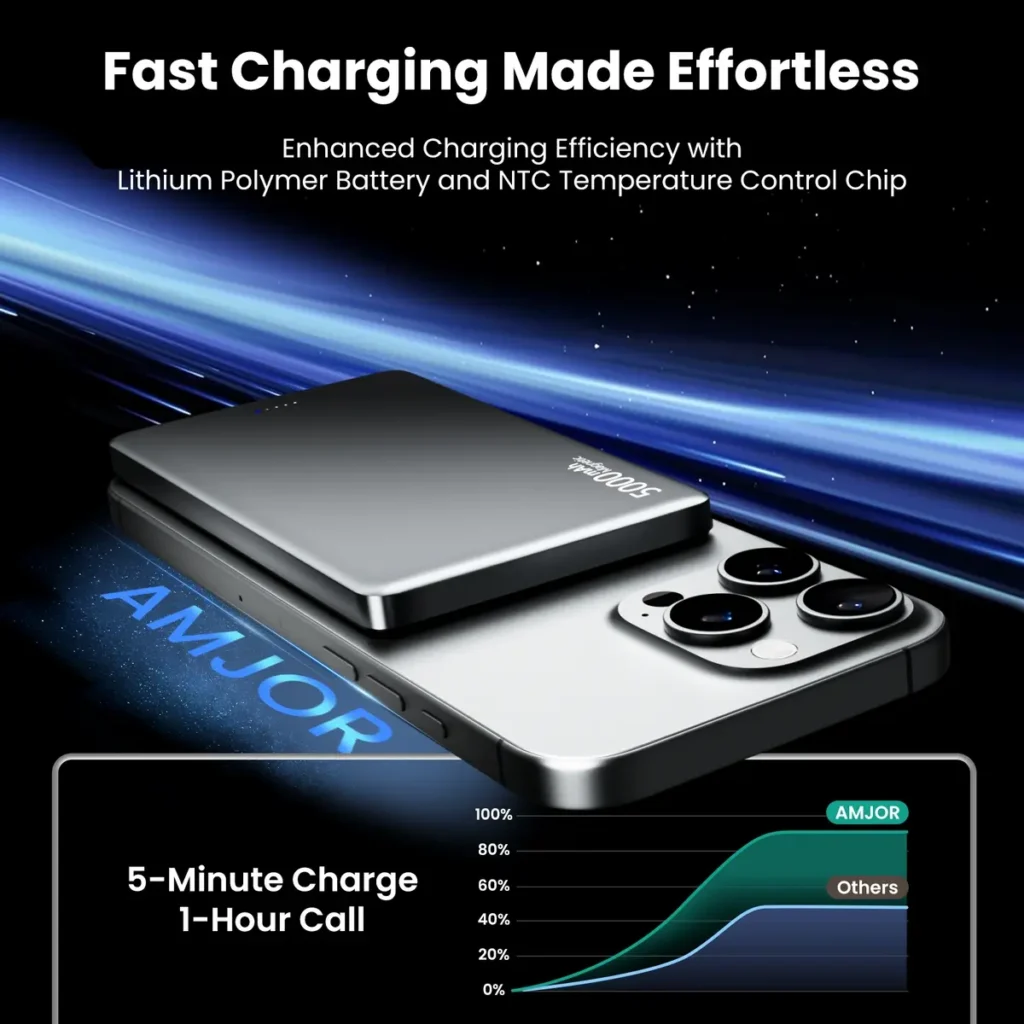
Mistake 1: Focusing Only on Capacity
Bigger capacity doesn’t always mean better performance, especially if fast-charging protocols are missing.
iPhones support PD fast charging up to 20W, so without PD support, even large power banks charge at a painfully slow rate.
For daily commuting, a 10,000mAh power bank with PD is more practical than bulky high-capacity models.
Mistake 2: Ignoring Ports and Cables
Many power banks still rely on USB-A, which limits fast charging for modern iPhones.
Choosing a Type-C portable charger ensures full PD compatibility and faster, more efficient charging.
Built-in cables also reduce clutter, making travel and daily carry much easier.
Mistake 3: Overlooking Weight and Portability
Power banks with a capacity of over 20,000mAh often weigh as much as a smartphone, discouraging their everyday use.
For work and commuting, a lightweight portable mobile power bank strikes the perfect balance between power and portability.
For long trips, higher capacity is useful, but airline regulations usually limit carry-on batteries to under 27,000mAh.